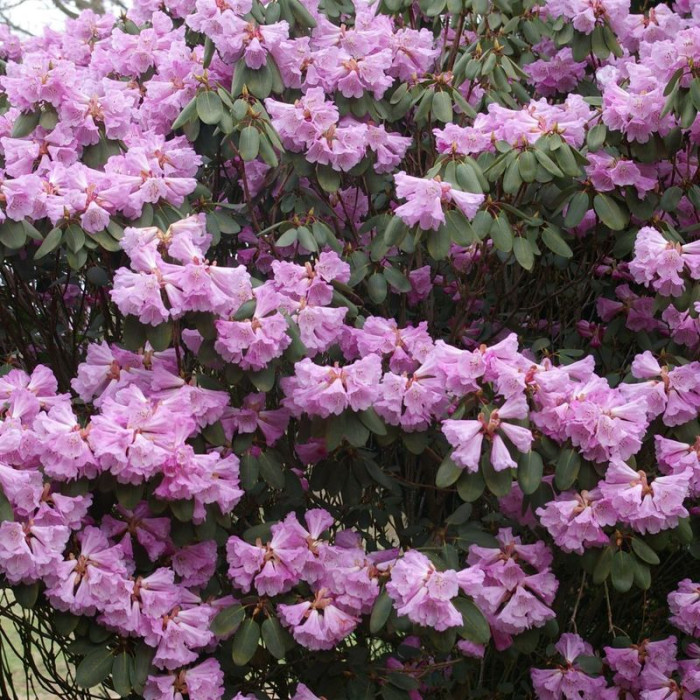
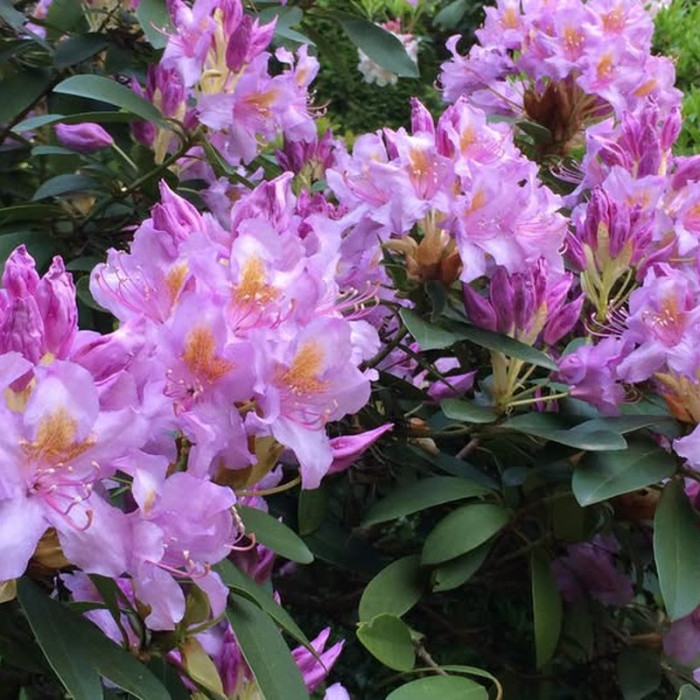
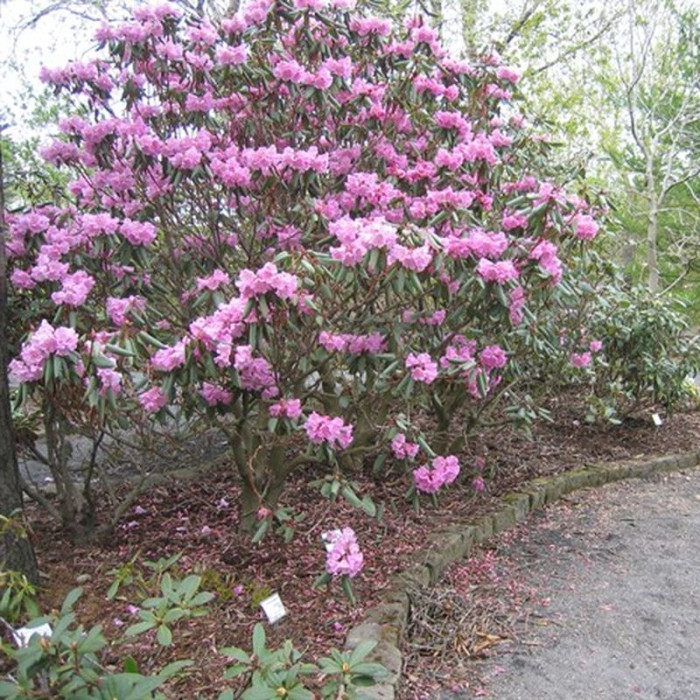
Rhododendron decorum / Rhododendron oreodoxa - a profusely flowering evergreen shrub 2–3 m tall, with grey-green rounded ovate leaves 5–9 cm long. It blooms in mid-spring with clusters of open funnel-shaped pink-lilac flowers, collected in inflorescences of 6–8 flowers.
It prefers acidic, well-drained soils rich in organic matter. It is ideal for planting in the shaded part of the garden.
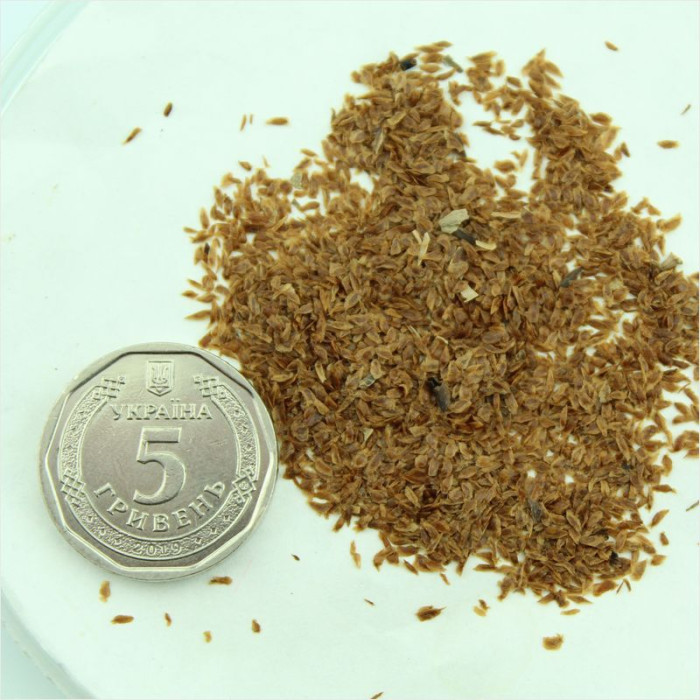
Seeds are sown on the surface without being covered with soil. Fungicide treatment of the sowing is recommended. Boxes are covered with glass or film to maintain high humidity. At room temperature, seedlings appear in 3–4 weeks.
Propagation of rhododendrons by seeds
Substrate composition. The optimal soil acidity at which rhododendrons develop well is within pH 4.0–5.5, although soil with pH 5.8 can also be used. Factors that determine the success of seed propagation in specific introduction conditions include the choice of sowing substrate, moisture regime, temperature, lighting, and seedling care. The substrate for sowing can vary, but it must be loose, acidic, and air-permeable. Fine fibrous rhododendron roots are located in the upper humus layer. Peat is an essential component of soil mixtures for germinating seeds and growing rhododendron seedlings.
The best time for sowing rhododendron seeds in a greenhouse at a temperature of 18–24 °C is November–December. Early sowing is advantageous because it extends the growth period of seedlings, allowing them to develop better during the growing season.
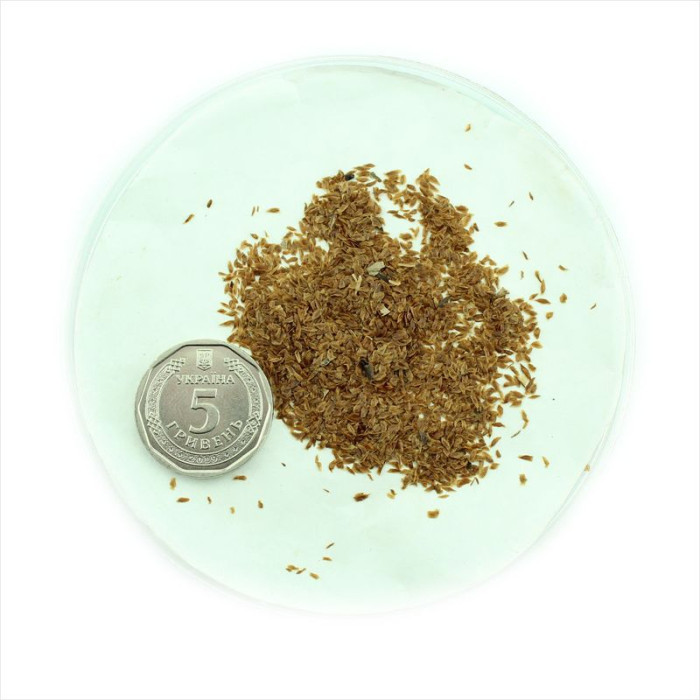
Since rhododendron seeds are very small and require light for germination, they must be sown on the surface without being covered, scattered evenly, and the containers covered with glass. As soon as most seeds germinate, the glass covering is removed, and the containers are moved to a cooler place (15–17 °C), where the young seedlings harden, strengthen, and develop better.
Further care consists of maintaining optimal moisture levels. Overwatering leads to infection, which spreads quickly, and within a few days young seedlings may die. Watering is best done in the morning using a sprayer or a watering can with a fine rose, very carefully.
No questions about this product, be the first and ask your question.