


Without proper and regular watering, it is impossible to get a good harvest of onions and garlic. However, for the bulbs to fully mature and store well for a long time, it is important to determine the right harvest time and stop watering the beds in time.
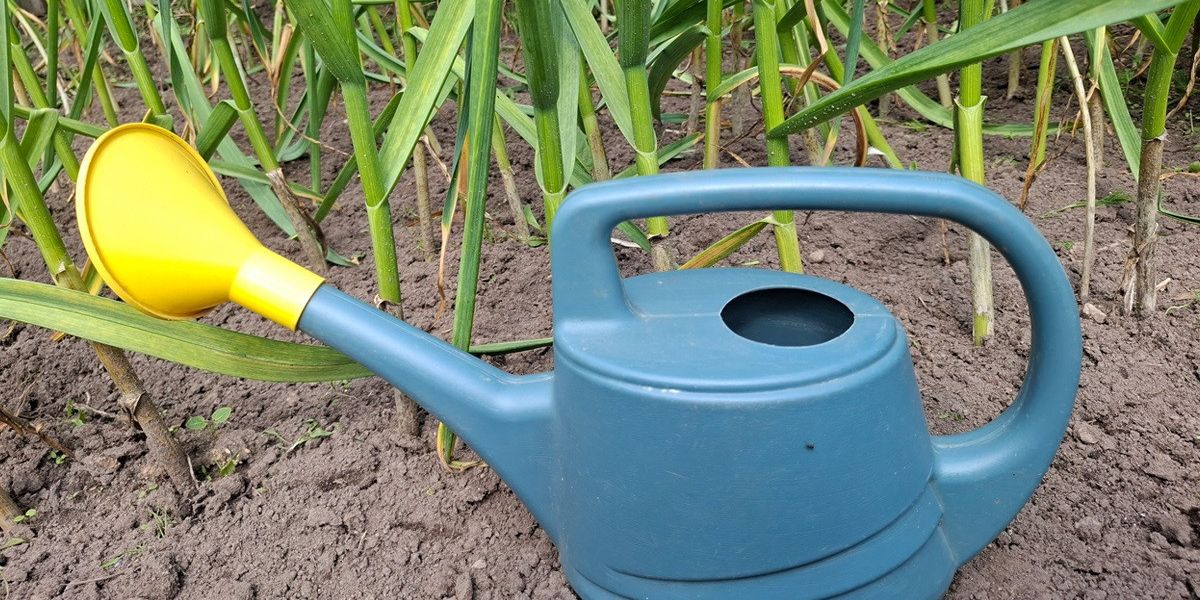
Onions and garlic have a fibrous root system located in the upper layer of the soil. Their roots do not branch and have weak water absorption capacity, which is why these crops respond well to watering and fertilizing, especially early in the growing season. However, watering shortly before harvest can do more harm than good and significantly reduce the storage life of the crop.
How to properly water onions and garlic
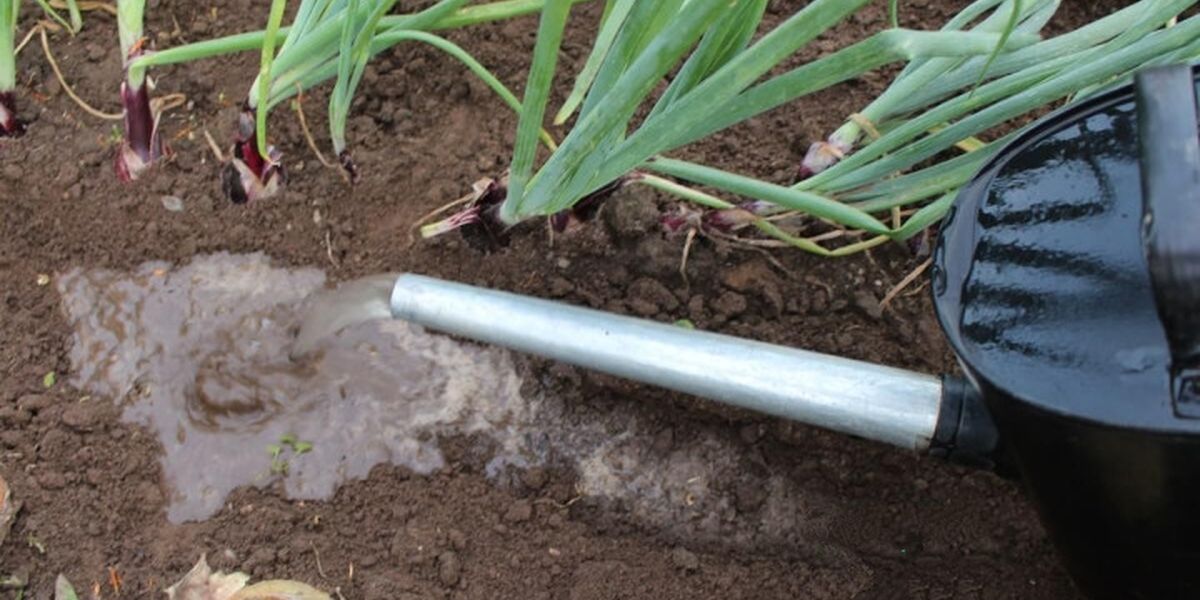
During the first half of the growing season, onions and garlic rapidly develop their above-ground parts and form bulbs. Therefore, the soil in the root zone should always remain moderately moist, allowing the plants to absorb nutrients from the soil solution and develop evenly. The optimal soil moisture during active growth is 75–80%.
Use settled water warmed by the sun for watering onions and garlic. Watering is best done in the morning or evening. During hot weather, water more frequently; during cool weather, less often. The watering frequency also depends on the soil type: sandy and sandy loam soils dry out more quickly, and nutrients (especially nitrogen) are washed out faster. Therefore, onions and garlic growing in such soils require both more frequent watering and regular feeding with water-soluble complex fertilizers.
Clay soils and loams retain moisture well, but they are dense, making root development more difficult. Excessive watering on such soils may lead to waterlogging and suppression of the root system. In addition, onions and garlic often suffer from rot when the soil is overwatered.
In July, bulb onions and winter garlic stop producing new leaves, and nutrients begin moving from the foliage into the bulbs. At this stage, onions and garlic no longer require constant soil moisture. Water only if there is no rainfall, and continue until the leaves begin to turn yellow.
Approximately 2–3 weeks before the expected harvest date, stop watering onions and garlic. This allows the bulbs to fully mature and develop dense, dry outer scales. If the crops are growing in clay soil, watering can be stopped earlier; on sandy soil, slightly later.
One month before harvesting onions and garlic, apply a potassium sulfate solution: 20 g per 10 L of water. This helps increase the sugar content of the bulbs, improves their flavor, and enhances storage quality.
How to determine the right harvest time for onions and garlic
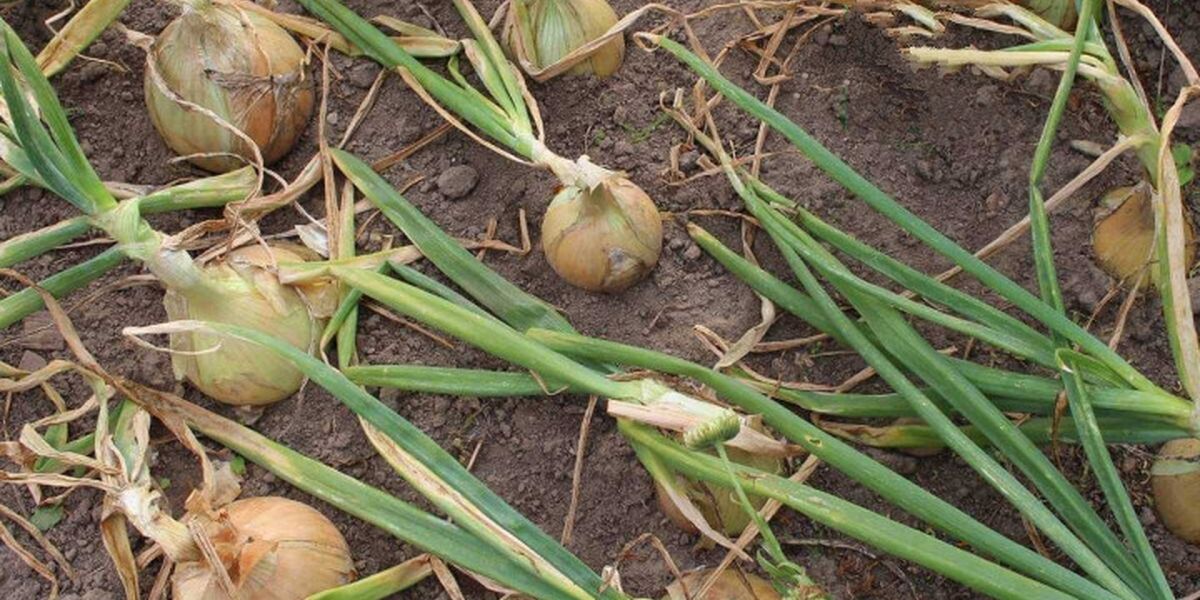
As a rule, bulb onions are harvested from late July through August, about 70–90 days after planting. Harvest time depends on the planting date, the variety, and the weather: onions mature faster in hot weather and more slowly in cool conditions. Winter-planted onions are harvested first, followed by early-maturing spring varieties. Late-maturing onions have a longer growing season.
The following signs indicate that onions are ready for harvest:
- the leaves begin to turn yellow;
- the tops fall over onto the ground;
- the outer scales acquire the characteristic color of the variety.
During rainy weather, onions may mature unevenly: some plants retain thick necks, the tops remain green and upright, even though the bulbs are fully formed and the outer scales have dried. To speed up the movement of nutrients from the leaves into the bulbs and prevent new growth, gently bend the tops down to the ground by hand.
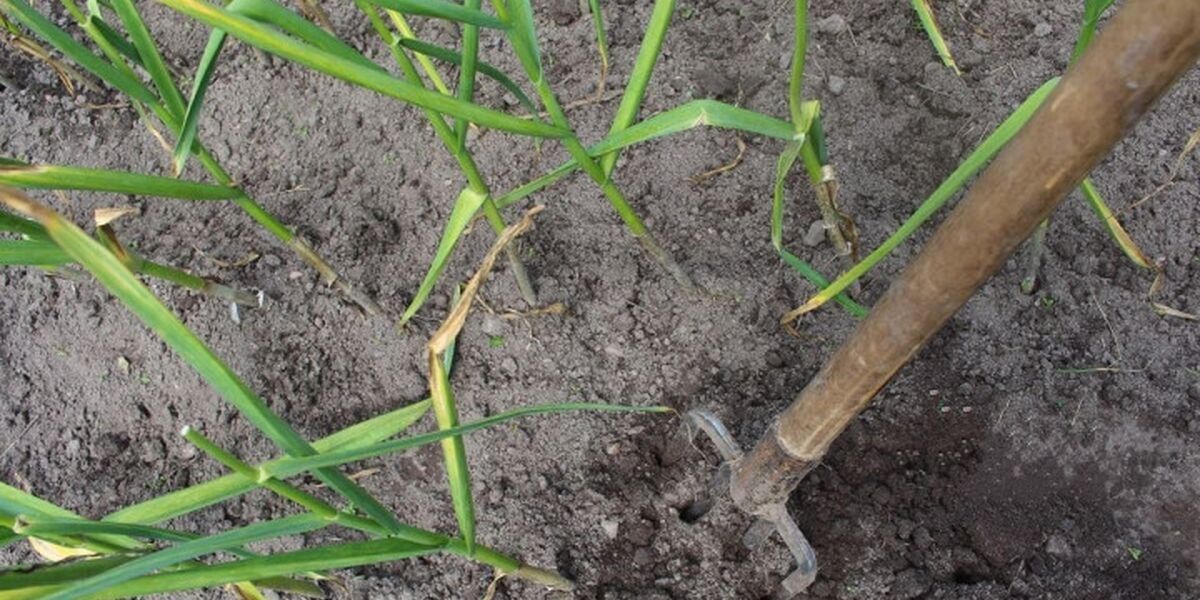
Winter garlic is ready for harvest when the lower leaves and leaf tips turn yellow and dry, the flower stalk straightens, and the seed head splits open. In temperate regions, this usually occurs in the second half of July. The exact timing depends on the climate and the variety: early varieties may be ready by mid-July, while late varieties may not mature until early August.
Spring garlic is harvested after the foliage turns yellow and falls over, usually in August. If planted late, harvesting may take place in early September. It is important to harvest garlic in dry weather before prolonged rains begin.
If harvesting is delayed, garlic bulbs may split into cloves while still in the soil, and new roots will begin to grow. Such garlic will not store well.
What to do if the soil becomes waterlogged
While spring garlic is usually watered and fertilized until late July or even mid-August, watering of winter garlic and early-maturing onions is stopped in early or mid-July, when the lower leaves begin to turn yellow.
But what should you do if it rains frequently in July? Since excessive moisture at the end of the growing season reduces bulb storage quality, install a temporary cover over the beds during prolonged rainfall. Place hoops over the beds and stretch plastic film across them, leaving the ends open for ventilation.
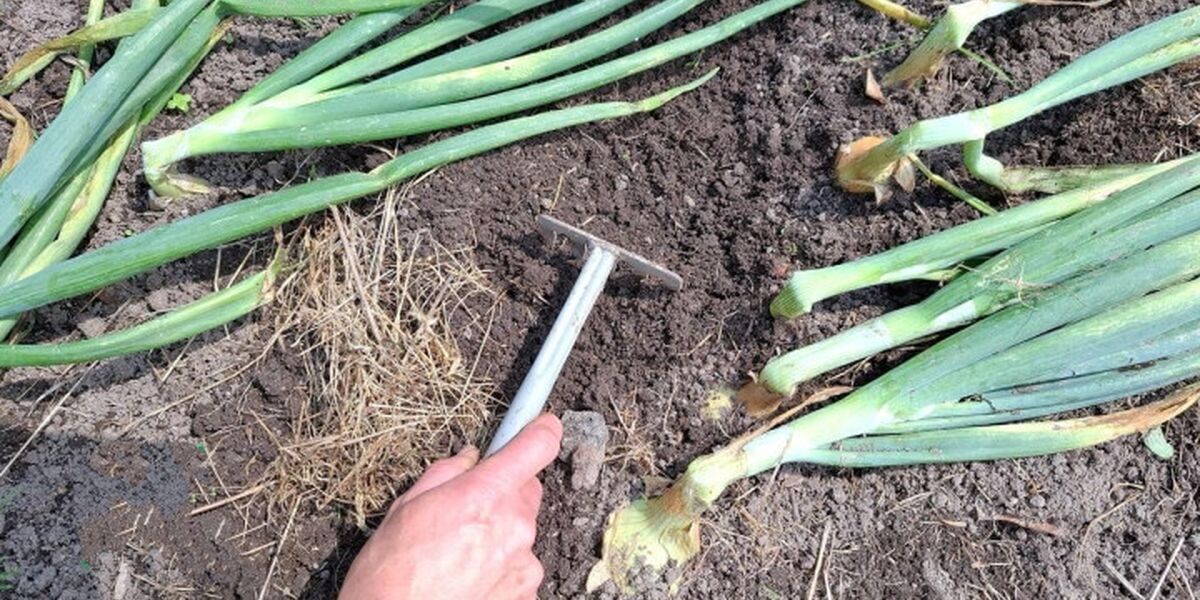
If this is not possible and the soil has already become waterlogged, loosen the soil between the rows immediately after the rain and carefully pull the soil away from the bulbs. Remove any mulch covering the bed. This will help the soil dry out more quickly, improve air circulation around the bulbs, and strengthen the protective outer scales, resulting in better storage.
If you need to speed up harvesting, carefully lift the onions with a garden fork or slightly cut the roots with a spade without damaging the bulbs, then leave the vegetables on the bed for several days. To speed up garlic ripening, tie the leaves into a loose knot so the tops dry out more quickly.
After harvesting, dry onions and garlic thoroughly in a shaded, well-ventilated place. Once the foliage has completely dried, trim the leaves and roots before placing the crop into storage.