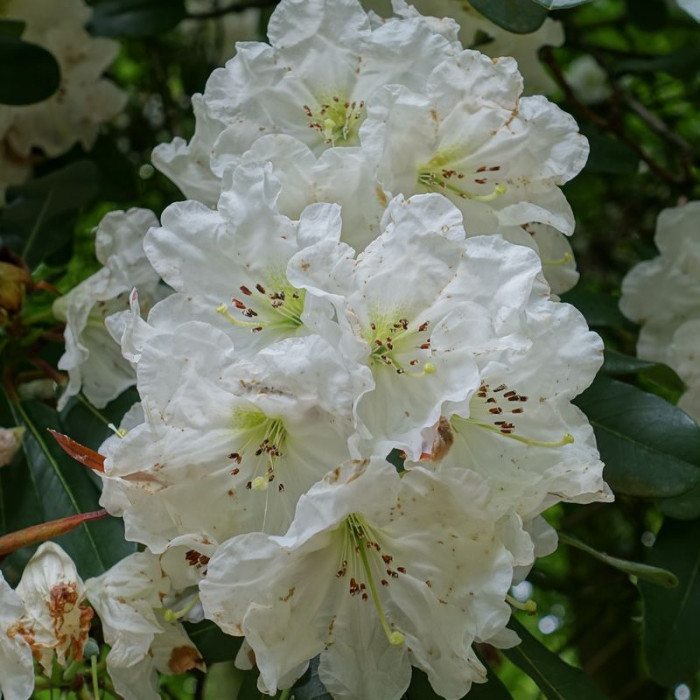
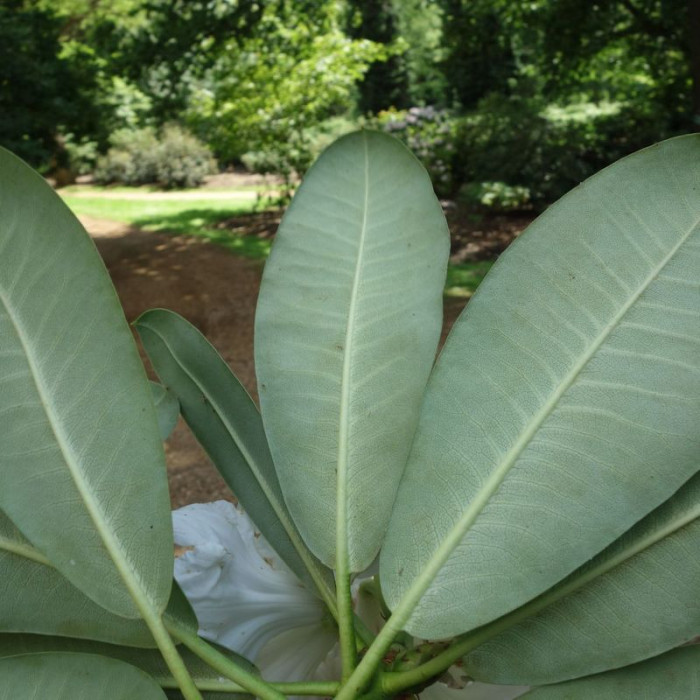
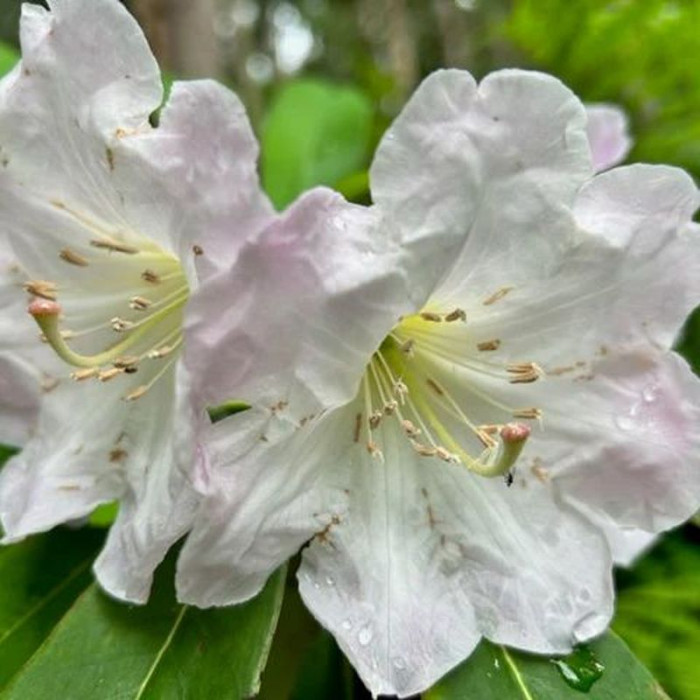
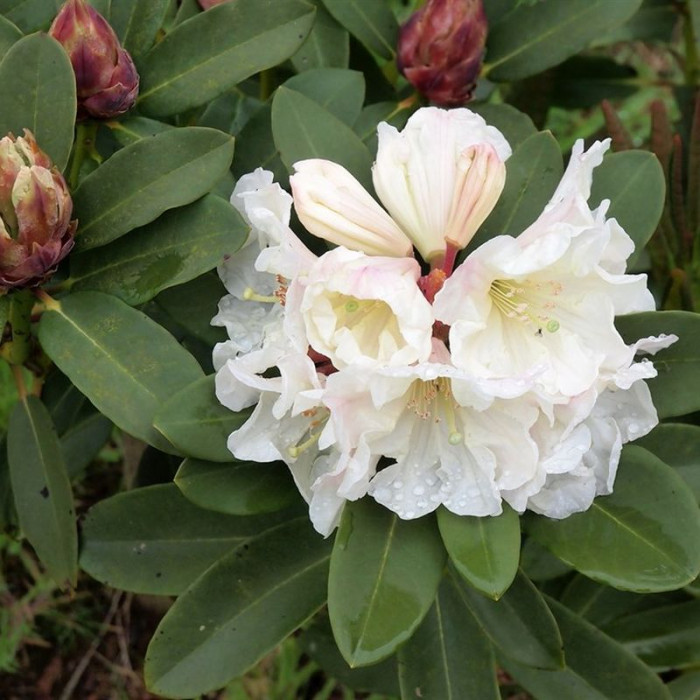
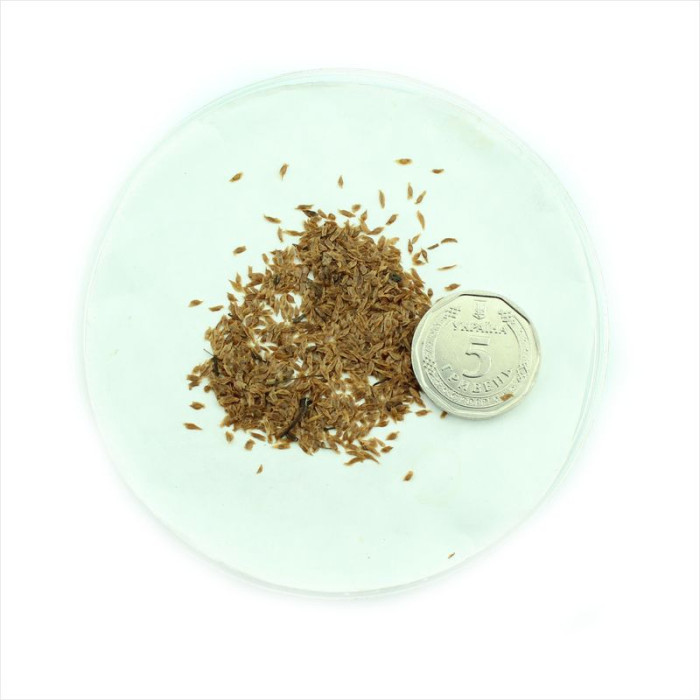
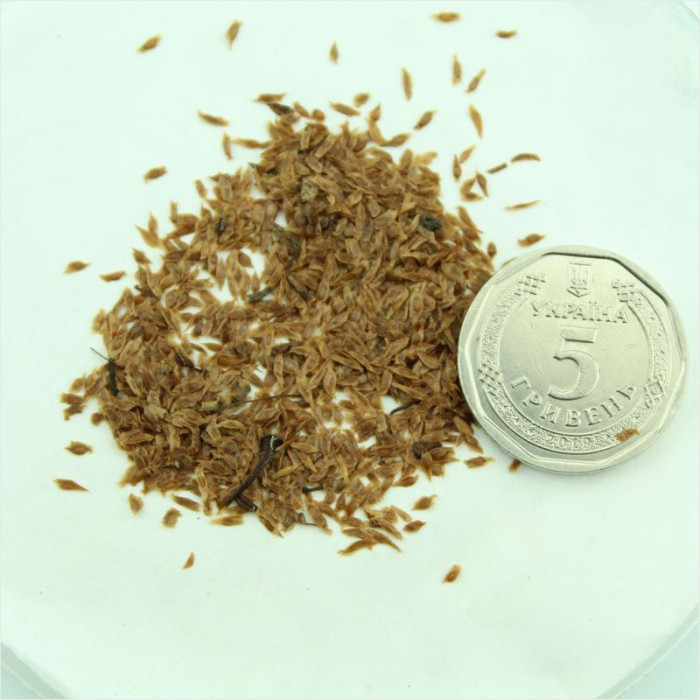
Great White Rhododendron / Rhododendron decorum - an evergreen, spreading shrub reaching 2–3 m in height. Leaves are light green, up to 15 cm long. Fragrant, large flowers 5–9 cm in diameter, grouped 8–10 per cluster. The color ranges from delicate pink to white.
A fast-growing shrub, with annual shoot growth up to 15 cm. Requires soils from acidic to neutral, rich in humus. Blooms in the second half of April and early May. Young shoots have a reddish tint and are highly decorative.
Grows well in partial shade. Hardy, but in severe, low-snow winters plants should be covered.
Seeds are sown on the surface, without embedding in the soil. Boxes are covered with glass or film to maintain high humidity. At room temperature, seedlings appear in 3–4 weeks.
Propagation of rhododendrons by seeds
Soil composition. The optimal soil acidity for rhododendrons is within pH 4.0–5.5, although soil with pH 5.8 can also be used. Factors that determine the success of seed propagation under specific introduction conditions include the choice of substrate for sowing, moisture regime, temperature, lighting, and seedling care. The substrate for sowing can vary, but must be loose, acidic, and air-permeable. The fine roots of rhododendrons are located in the upper humus horizon. Peat is an essential component of soil mixtures for seed germination and seedling cultivation.
The best time for sowing rhododendron seeds in a greenhouse at 18–24 °C is November–December. Early sowing is advantageous because it extends the growth period of seedlings, allowing them to develop better during the growing season.
Since rhododendron seeds are very small and require light for germination, they should be sown on the soil surface without covering, scattered, and the boxes or pots covered with glass. Once most seeds have germinated, the glass is removed and the containers are moved to a cooler place (15–17 °C), where young seedlings harden, strengthen, and develop better.
Further care for seedlings involves maintaining optimal moisture. Overwatering leads to infection, which spreads quickly, and within a few days young sprouts may die. Watering is best done in the morning with a sprayer or garden watering can with a fine sieve, and with extreme caution!
No questions about this product, be the first and ask your question.