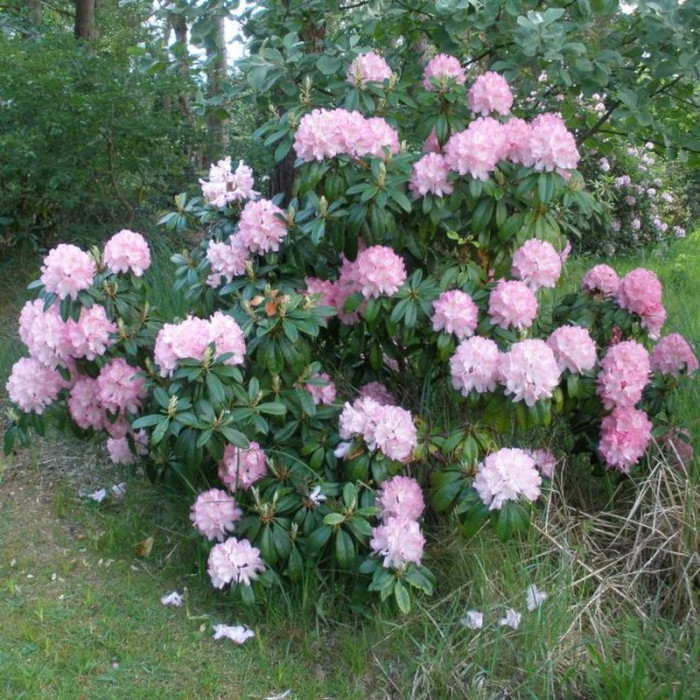
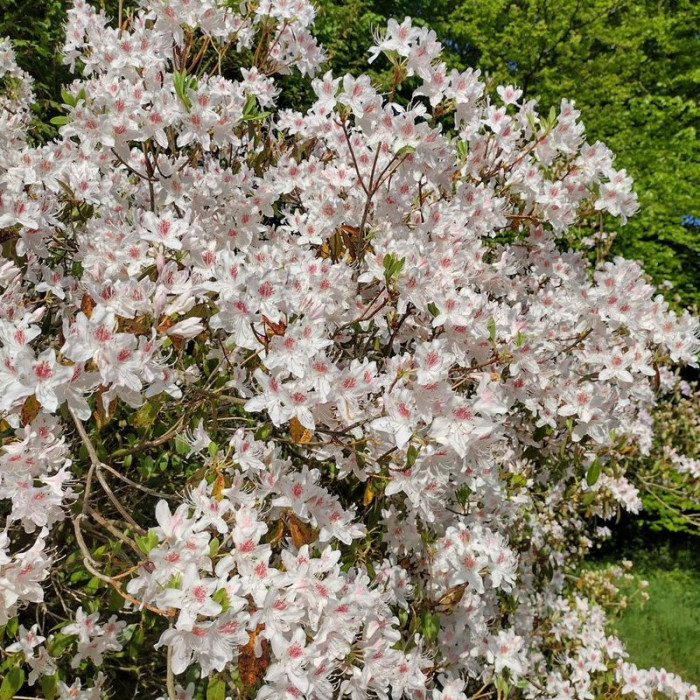
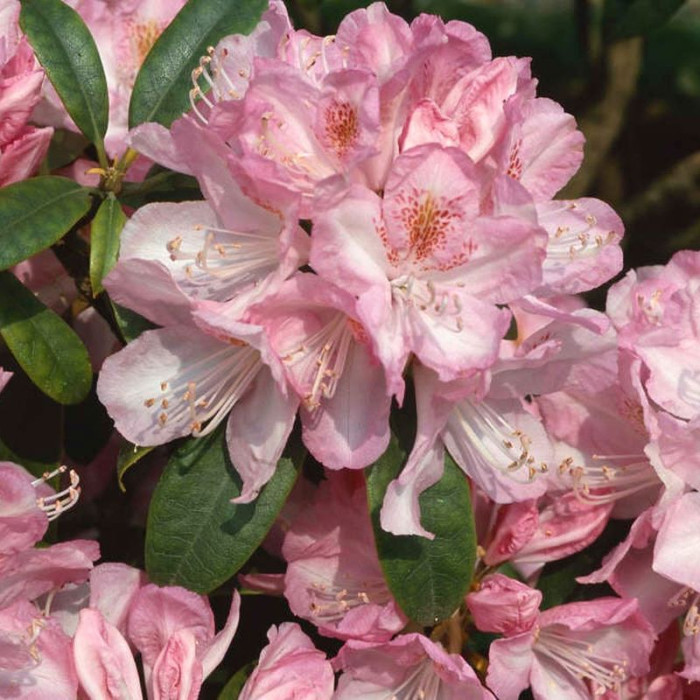
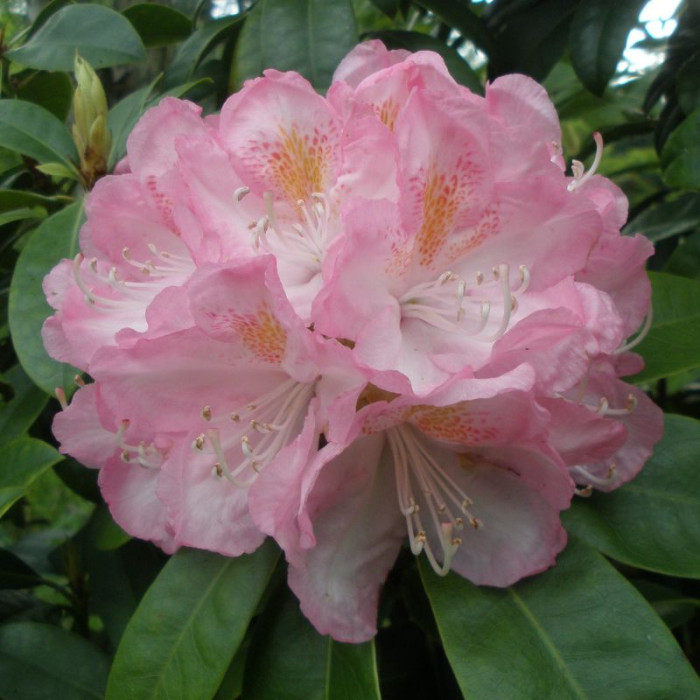
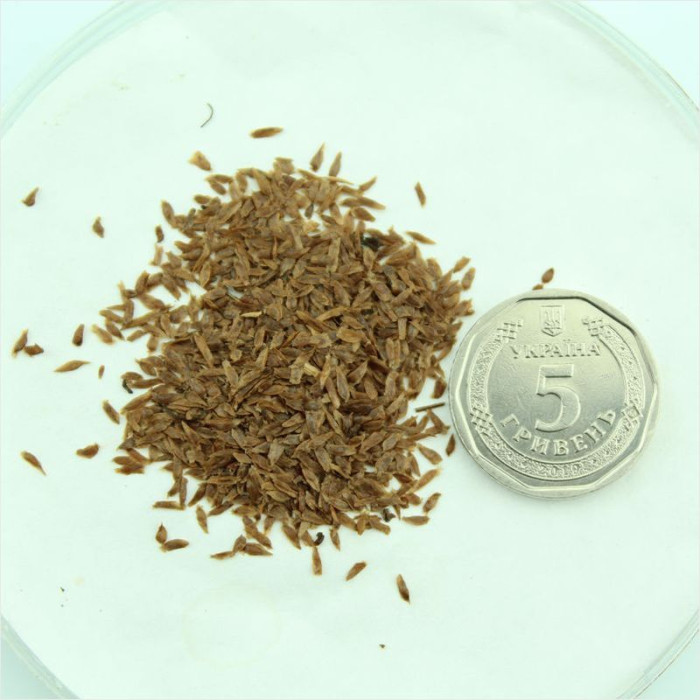
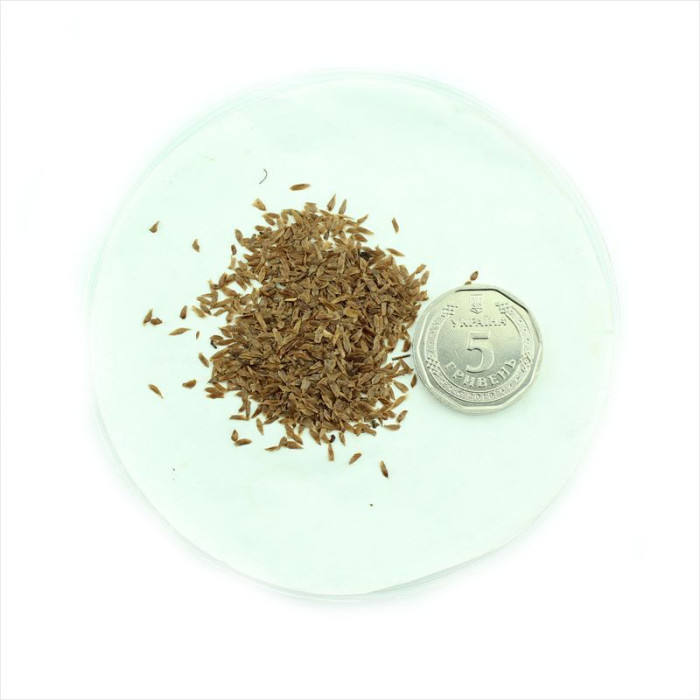
Rhododendron «Clementina» / Rhododendron clementinae - a rare and valuable species, known for its unusual foliage. Young leaves are colored in a steel bluish shade, giving the shrub a special decorative appeal. Over time they turn deep green, retaining attractiveness throughout the season. This is an evergreen rhododendron, so its decorative foliage adorns the garden year-round.
The shrub reaches up to 3.5 meters in height and is distinguished by vigorous growth. The taxonomy of this species is rather complex: several forms exist, including *Rhododendron clementinae ssp. clementinae*, highlighting the richness and diversity within the species.
For successful cultivation, rhododendrons require acidic, moist, but well-drained soils. It prefers partial shade and does not tolerate direct scorching sunlight. It is important to avoid planting near trees with shallow root systems, such as birch or spruce, as they will compete for moisture and nutrients.
Watering should be regular and abundant, especially in spring and during active growth. The soil must remain moist but without waterlogging. To maintain acidity and nutrition, it is recommended to use special fertilizers for rhododendrons and azaleas.
Flowering in this species occurs late — seedlings begin to bloom only after 6–8 years. However, the decorative foliage makes the plant attractive even before the first buds appear.
In care, it is important to water regularly, especially on hot days, using rain or river water. After flowering, faded inflorescences should be removed carefully, preserving the axillary buds to ensure abundant flowering in the future.
Propagation of rhododendrons by seeds
Soil composition. The optimal soil acidity for rhododendrons is within pH 4.0–5.5, although soil with pH 5.8 can also be used. Factors that determine the success of seed propagation under specific introduction conditions include the choice of substrate for sowing, moisture regime, temperature, lighting, and seedling care. The substrate for sowing may vary, but must be loose, acidic, and air-permeable. The fine roots of rhododendrons are located in the upper humus horizon. Peat is an essential component of soil mixtures for seed germination and seedling cultivation.
The best time for sowing rhododendron seeds in a greenhouse at 18–24 °C is November–December. Early sowing is advantageous because it extends the growth period of seedlings, allowing them to develop better during the growing season.
Since rhododendron seeds are very small and require light for germination, they should be sown on the soil surface without covering, scattered, and the boxes or pots covered with glass. Once most seeds have germinated, the glass is removed and the containers are moved to a cooler place (15–17 °C), where young seedlings harden, strengthen, and develop better.
Further care for seedlings involves maintaining optimal moisture. Overwatering leads to infection, which spreads quickly, and within a few days young sprouts may die. Watering is best done in the morning with a sprayer or garden watering can with a fine sieve, and with extreme caution!
No questions about this product, be the first and ask your question.